Monster Hunter Now
- 4.5
- Rating
- 5.00M
- Installs
- Free
- Price

 Analysis by App-foxy
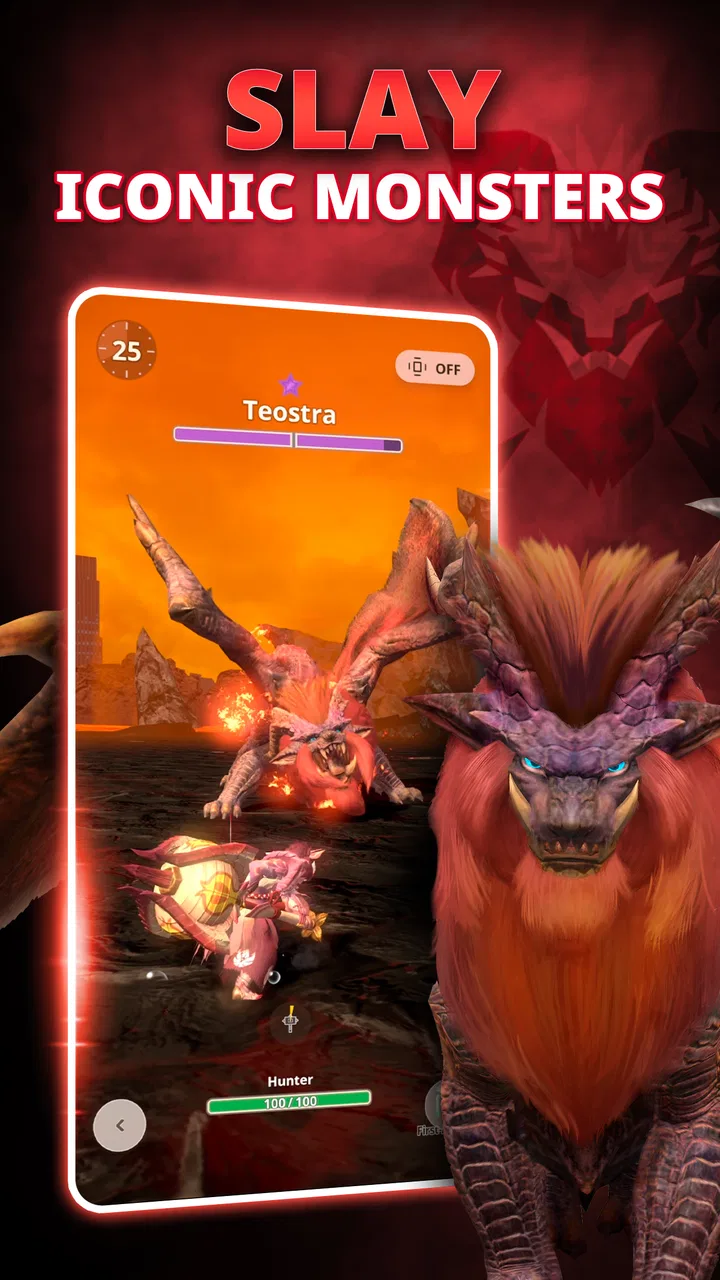
Monster Hunter Now is a convincing attempt to bring hunting into ordinary walks rather than keeping every battle inside a living-room screen. Developed by Niantic, Inc., this free action game places monster encounters in the real world and asks me to make short decisions repeatedly: whether to stop for a fight, which equipment approach suits the target, and when it is wiser to move on. My overall view is positive, but with an important qualification: it works best as a compact outdoor game built around routine, not as a complete replacement for a traditional Monster Hunter adventure.
The appeal becomes clear when I play in small sessions. I do not need to reserve an entire evening for it. A walk to a shop, a break between errands, or a few minutes outside can become a sequence of hunts. That structure gives the game its identity. It is not merely a conventional action title with a map added on top; the surroundings shape when I play and how much commitment I can give each encounter.
Why the real-world hunting loop works
The most successful part of the experience is the way it turns movement into a reason to return. Instead of waiting for a long quest session, I can check what is nearby, choose a practical target, and decide whether the moment is suitable for combat. This makes progress feel connected to my day. A short walk has a purpose, while a longer outing offers more opportunities to gather materials and look for useful encounters.
You May Also Like

 Blood Strike: 2.5 Anniversary
Blood Strike’s Loadouts Turn Every Drop Into a Tactical Gamble
A close look at Blood Strike’s custom loadouts: how fast access to signature weapons reshapes its battle royale rhythm, rewards preparation, and narrows the gap between fights.

 Pandora - Music & Podcasts
Pandora’s Music Is Easy to Start, but Harder to Recover
Pandora’s strength is its low-effort path from a seed to a station. Its weak spot is how much confidence it asks you to place in connection, setup, and quiet recovery.

 8 Ball Pool
 Is Built on Rivalries, Rematches, and Routine
A close look at the rivalries, rematches, shared routines, and unanswered safety questions that turn a quick pool match into a persistent mobile community.

 Samsung Music
’s Quiet Strength Is Playing What You Already Own
Its reach comes less from spectacle than from dependable access to a personal library. That simplicity is both the app’s strongest retention engine and its ceiling.

 AccuWeather: Weather Radar
AccuWeather Review: A Quick, Clear Forecast for Everyday Decisions
For everyday plans, the best forecast is the one you can understand quickly. AccuWeather makes rain timing, radar, and local conditions easy to act on, with a few trade-offs.

 Hill Climb Racing
Why Hill Climb Racing Still Turns Crashes Into One More Run
A tiny car, a bumpy hill and one more upgrade: Hill Climb Racing keeps resurfacing because its simple chaos makes every near-miss feel personal.
More From Our News Desk
View All News


I especially like the tension between convenience and preparation. A hunt may be available when I am already busy, so I have to judge whether it is worth stopping. That small decision is more interesting than it sounds. If I am walking with someone, crossing a street, or carrying bags, the right choice is often to continue and return later. The game rewards attention, but it should never compete with basic awareness outdoors.
Combat is the reason to stay rather than simply explore. Encounters ask for active input, timing, and a willingness to learn the behavior of different monsters. The best fights are not solved by tapping without thought. I have to watch the opponent, recognize danger, and use the brief opening that follows. That gives even a short battle a satisfying sense of responsibility: mistakes feel connected to my decisions rather than to an invisible dice roll.
There is also a useful rhythm between hunting and improving my options. A successful encounter is not only a victory screen; it contributes to a longer process of becoming better prepared. That loop is familiar to fans of the series, but the mobile format changes its meaning. I am not usually building toward one uninterrupted campaign. I am collecting small gains that make the next walk or next group of encounters more worthwhile.
My strongest practical tip is to treat the map as a menu of priorities instead of trying to clear everything. When I have limited time, I focus on targets that support the equipment direction I am already pursuing. Chasing every possible encounter can make progress feel scattered, while choosing a clear goal makes a ten-minute session feel productive. This is one of the differences between casually opening the game and actually using its outdoor structure well.
Short sessions are a real strength
Many mobile action games struggle to fit into ordinary life. They either demand long attention or reduce play to repetitive gestures. Monster Hunter Now sits between those extremes. A hunt can be approached as a brief activity, yet the combat still asks me to participate. That balance makes it suitable for people who enjoy action games but cannot commit to a console-length session every day.
A realistic example is a commute on foot. I can begin by checking nearby activity before leaving, handle a fight while safely stopped, and continue walking afterward. If the area offers several worthwhile choices, the route feels more engaging. If nothing suits my current goal, I have not lost much by closing the game. This low-pressure relationship with the map is more comfortable than systems that punish me for missing a long daily session.
The same quality helps when playing with a friend. The game gives an outing a shared activity without requiring both people to sit through a fixed mission from beginning to end. We can compare what we found, decide which encounter deserves attention, and keep moving. That flexibility is valuable for casual players who want a reason to explore together but do not want a complicated multiplayer schedule.
At the same time, the outdoor design creates responsibilities that a standard action game does not. I would not recommend fighting while crossing roads, cycling, or navigating an unfamiliar place. The safest habit is to stop somewhere appropriate before interacting with the screen. This sounds obvious, but the game’s central idea makes it especially important because the most tempting encounters may appear precisely when I am in motion.
Learning the systems without wasting effort
The game is friendlier when I accept that early experimentation has a cost. Materials and upgrades encourage planning, so I try not to spread attention across every possible option immediately. A focused approach gives clearer feedback: I can tell whether a new improvement genuinely helps my preferred style instead of constantly changing direction and wondering why progress feels slow.
Another useful habit is to separate “interesting” from “urgent.” A rare-looking opportunity may be exciting, but it is not automatically the best use of time if I am unprepared or if the encounter demands more attention than the situation allows. I prefer to keep a simple mental shortlist: targets that advance my current build, targets that teach me something, and targets that are simply convenient. That prevents the map from turning into a checklist.
Players coming from the main console series should also adjust expectations. The mobile version captures the pleasure of recognizing monsters, reacting to attacks, and improving hunting readiness, but it compresses those ideas into repeatable outings. I enjoy it more when I treat it as a companion experience rather than expecting the same depth, story scale, or uninterrupted hunt structure found in a full traditional release.
The friction that limits long-term enjoyment
The biggest weakness is that the game’s best feature can also become its main inconvenience. Because the world around me determines when I can play, the experience depends heavily on where I am and how much time I have. A player in a place with few practical opportunities may find the loop less satisfying than someone who regularly walks through active areas. The game is therefore less predictable than a self-contained action title.
Its free entry is welcome, but the presence of optional purchases changes how I think about progression. The available purchase range runs from $0.99 to $99.99 per item, so I would approach spending carefully. I prefer to decide in advance what kind of player I am: someone sampling the game without paying, or someone willing to buy occasional convenience. The danger is not that spending is required for the basic appeal; it is that repeated small decisions can become harder to evaluate when I am already invested in a hunt.
That matters because the game encourages return visits. A player who enjoys collecting materials and improving equipment may naturally want to accelerate a slow point or take advantage of a convenient opportunity. I recommend playing long enough to understand the normal rhythm before buying anything. If the core loop does not feel rewarding at its ordinary pace, purchases will not solve the underlying problem.
The action also has a narrower range than a console game. Short encounters are excellent for a phone, but they can become repetitive if I want a broad campaign with elaborate exploration and extended battles. The mobile format favors repetition with gradual improvement. Players who mainly want a story-heavy adventure, large uninterrupted areas, or deep character customization may be happier with a conventional Monster Hunter release or another dedicated action game.
There is a second, quieter limitation: the game can make an outing feel goal-oriented when I would rather simply be present. I sometimes catch myself evaluating a walk by what it produced instead of enjoying the route. That is not a flaw in every session, but it is a useful warning. I get the most from the game when it adds a little purpose to an outing, not when it becomes the reason I ignore the outing itself.
Who should install it
I would recommend it first to Monster Hunter fans who want a lighter way to stay connected with the series. Familiarity helps, but it is not essential. The important qualities are patience, curiosity about combat, and willingness to play in short bursts. Someone who enjoys learning enemy patterns and gradually improving a setup will find more here than someone looking only for a quick arcade distraction.
It is also a good fit for people who already walk regularly. The game does not need to replace a fitness routine or turn every trip into a mission. It works best when attached to movement that is already happening. A person who walks to nearby destinations can use it as an optional layer, while someone who dislikes outdoor play may find its central concept more restrictive than attractive.
Social players should consider it if they like comparing progress and hunting alongside others without needing a formal appointment every time. The flexible structure makes casual cooperation more approachable than a fixed multiplayer campaign. Still, it is not the right choice for someone seeking a fully organized competitive experience or a game that guarantees the same quality of session wherever they are.
I would tell story-focused players to be cautious. The appeal here comes from the hunt itself, the real-world setting, and the gradual preparation loop. If narrative momentum is the main reason you play action games, this may feel thin beside a traditional adventure. Likewise, players with limited outdoor access, unreliable opportunities to stop safely, or little tolerance for repeated encounters should probably choose a self-contained action title instead.
Device and purchase expectations
The game is free to start and has a Teen content rating, which makes it approachable for a broad audience while still signaling that it is not aimed at very young children. It supports Android devices running OS version 9 or later. Before installing, I would still think about how often I can use it safely and comfortably outdoors; compatibility alone does not guarantee that the format will suit my routine.
Its current version is 115.0, and the game has reached over five million installs. It holds a 4.5 average from around 299 thousand ratings, with roughly 12 thousand written reviews. Those figures suggest a substantial audience and a generally favorable reception, but I would treat them as context rather than a promise. The experience remains highly personal because location, available time, and tolerance for repeated progression all matter.
The purchase model deserves the same balanced reading. Free access makes it easy to test the combat and map loop without making a commitment, while optional items can appeal to players who want to support or accelerate their play. My advice is to enjoy the basic routine first, set a spending limit, and avoid buying simply because a single session went badly. A considered purchase is easier to justify than an emotional one made after a frustrating hunt.
My verdict after living with the loop
Monster Hunter Now succeeds because it understands what can be removed from a large action game without removing its character. It keeps the satisfying core of noticing a monster, responding to its behavior, and becoming better prepared, then places those moments inside real walks and everyday pauses. That is a strong idea, and in my experience it produces some genuinely memorable short sessions.
Its limitations are just as specific. The map and outdoor setting can make play inconvenient, repetition can test patience, and optional purchases require self-control. It is not a substitute for a full console-style campaign, and it should not be played in situations where the phone distracts from safety or other people.
My recommendation is clear: install it if you want a portable hunting companion that gives ordinary walks a little action and purpose. Start without spending, focus on a manageable equipment direction, stop before interacting with the screen in unsafe places, and judge the game by whether its short routine improves your day rather than consumes it. For that audience, this is a thoughtful and enjoyable action game from Niantic, Inc. For everyone else, especially players seeking a deep standalone adventure, a more traditional alternative will likely be the better fit.
FAQs for Monster Hunter Now
01What is Monster Hunter Now?
Monster Hunter Now is an augmented reality (AR) game developed by Niantic, in collaboration with Capcom. It lets players hunt various monsters in real-world locations using their smartphones. The game combines elements of exploration, strategy, and combat, similar to the popular Pokémon GO, but with a focus on hunting and capturing monsters.
02Is Monster Hunter Now free to play?
Yes, Monster Hunter Now is free to download and play on both Android and iOS devices. However, the game includes in-app purchases that allow players to buy items, enhance their gameplay experience, or progress faster. These are optional and not necessary to enjoy the full game.
03What are the system requirements for Monster Hunter Now?
To run Monster Hunter Now smoothly, Android users need a device with at least Android 7.0, while iOS users require an iPhone 6s or later with iOS 11 or above. A stable internet connection and GPS functionality are also necessary, as the game heavily relies on location-based features.
04Does Monster Hunter Now require an internet connection?
Yes, an internet connection is required to play Monster Hunter Now. The game relies on real-time data and location services to provide an interactive AR experience. A stable connection ensures that players can seamlessly explore, hunt monsters, and interact with the game’s features.
05How does multiplayer work in Monster Hunter Now?
Monster Hunter Now offers multiplayer features, allowing players to team up with friends or other players. They can join hunts together, strategize to take down tougher monsters, and share rewards. The multiplayer aspect enhances the social experience and provides opportunities for collaboration and teamwork.
Pros
- Stunning graphics enhance gameplay.
- Intuitive controls make it easy to play.
- Engaging storyline keeps players hooked.
- Frequent updates with new content.
- Multiplayer mode encourages teamwork.
Cons
- Requires constant internet connection.
- High battery consumption on devices.
- In-app purchases can be costly.
- May lag on older devices.
- Requires a lot of storage space.

Monster Hunter Now
Gallery